“I have this vision that someday Canadians come face to face with God and He will be saying, “What did you do with this country that I gave you?’”- Broken Country film
MPs have returned to Ottawa and this week they reengaged in fiery rhetoric about the affordability crisis in the country; many questions were asked and left unanswered. In their debates, MPs seemed to be acting out a script rather than earnestly addressing the immediate needs of Canadians and the country. Any cursory scan of recent headlines and published studies reveal that Canadians are facing mounting challenges. Herein are fieldnotes that compile a week’s worth of news and data to provide both focus and a sense of urgency for addressing the matters impacting the nation.
Struggles for a growing number of Canadians
- One in five parents (19 per cent) of 35- to 40-year-olds are helping them “cover the costs of everyday life,” paying their groceries, rent and utilities bills, according to a new RBC Report. One in two parents (51 per cent) have provided financial support to an adult child in the past year, giving an average of $6,151. RBC stated in its media release, “A new kind of ‘Family Plan’ is taking shape in Canada.”
- Nearly one in four (23.2 per cent) Canadian households in 2024 were living in “unaffordable” housing (that is spending more than 30 per cent of their income on shelter costs), as reported by Statistics Canada. One in three renters (33.7 per cent) live in unaffordable housing.
- Canadians’ cost of living continues to rise, with the consumer price index at 3.0 per cent – well above the Bank of Canada’s target of 2.0 per cent. Gas prices are up 22.8 per cent on the year, groceries up 2.8 per cent in August after a 3.1 per cent rise in July, and food inflation has now been outrunning the CPI rise consecutively for 18 months. All Canadians have suffered sticker shock at the grocery store: since June, pork chops are up 17 per cent, coffee 11 per cent, and chicken nuggets 10 per cent. Diesel now costs $2.75 a litre, up 80 per cent in one year – 49 cents of a litre is carbon tax. Truckers’ pump prices are being passed onto consumers (despite Prime Minister Mark Carney’s claims that his carbon tax is not impacting grocery prices).
- Apart from the bread-and-butter issues, Canadians are feeling less confident about public safety. Over the last decade violent crime is up 57 per cent, sexual assaults are up 74 per cent, and gun crime is up 103 per cent. The latest horrific incident in the news occurred during the Jewish Yom Kippur celebrations in Belleville where the Sons of Jacob synagogue was bullet riddled and a police constable was shot. On another note, the school board elections this fall in Toronto, Ottawa, and York Region have candidates campaigning for placement of police officers in schools to address parents’ growing concerns of violence, weapons, and the safety of their children.
- Canadian businesses are also feeling less confident. The Canadian Federation of Independent Business (CFIB) reports that over one in five small businesses (22 per cent) describe themselves as being in “weak” or “critical condition.” There are less than one in five business owners (18 per cent) who would advise someone to start a business in Canada right now; two in three (65 per cent) cite the tax burden is too high, and half (53 per cent) damn the government’s regulatory burdens.
And here is a startling statistic when considering quality of life: in 2024 there were more Canadians who died from state-assisted euthanasia (MAiD) than Americans who died in gun homicides (16,499 to 15,364) – and that needs to be punctuated with the fact that America is eight times the population of Canada. One in 20 Canadian deaths is now processed via MAiD – and Parliament is currently debating extending the service to the mentally challenged.
Carney government plans are failing Canadians
Argumentatively the greatest challenge in the country, from which many standards of living issues stem, is the housing shortage crisis. The government has promised to address this crisis by building 500,000 homes annually and Carney repeatedly tells Canadians that, “We’re building more homes, faster.” Yet, all data indicates the crisis in housing has worsened and this failure epitomizes Canada’s broken promise. Canadians are giving up on the dream of homeownership, 20- and 30-year-old Canadians are living with their parents, complicating their aspirations for marriage and starting a family. Recent Statistics Canada data show the country’s fertility rate is at an all-time low and the average age of mothers at childbirth is a new high of 31.9 years, up from 26.7 years in 1976. It stands to reason that when there is no home there is no marriage bed.
Last week Canadian Mortgage and Housing Corporation (CMHC) reported that the pace of home construction has decreased (down four per cent this year) and the 229,000 housing starts expected this year is running at less than half the government’s promised target – in spite of the new Build Canada Homes bureaucracy the prime minister touts as the solution to the severe housing shortage. CMHC also reported this month that if Canadians wanted 2019 housing affordability, home construction in Canada must double to meet current demand, and stated: “Based on our current projection, Canada still faces a long-term housing supply gap of 187,000 to 238,000 homes per year over the next decade.” It further stated, “Construction is expected to slow faster than demand, leaving Canada short of the roughly 417,000 to 469,000 homes needed each year to restore pre-pandemic affordability by 2036. Not building enough during the current housing downturn is a key risk.”
The mismanagement of the housing crisis is but one example where the government’s grandiose announcements have been found to be nothing more than overpromising grandstanding. Canada’s problems are more complex and bigger than the Carney government lets on. This year there have been setbacks with the new Invest in Canada bureaucracy ( as well as the new Defence Investment Agency. Then there is the Majors Project Office that was to expedite infrastructure projects of national interest and has yet to approve one new project. Despite the suggestion that there are 500 projects being handled by the office, there has been no new project approved – no shovels in the ground in over a year. From the $8.25 billion Jackpine Oil Sands mining project to the $2.5 billion Pike 2 greenfield project, there are at least 10 major projects that should have started in 2026 and are on hold awaiting federal approvals. Federal supported projects like the Pathways Carbon Capture facility or the West Coast Oil Pipeline are years away from being started, never mind being operational. The Liberals’ promises to grow Canada’s economy are proving hollow; the recent OECD’s economic outlook report pegs Canada’s pace of economic growth at below one per cent (0.9 per cent), behind that of Mexico at 1.5 per cent and less than half the pace of the U.S. at 2.2 per cent.
Canadians to expect increased media censorship and surveillance
With the country’s sagging economic performance and continual decline of Canadians’ standard of living, there is a lot to question the government about, and Canadians are not being served well by the mainstream media, much of which is heavily government subsidized. Having been fed state-sponsored news for years now, Canadians’ confidence in media has waned, yet both government and the mainstream commentators conclude that it is the rise of independent journalism and the proliferation of misinformation in social media that is the root cause of Canadians’ mistrust in media. To tackle this issue, the Carney government plans to establish a list of “legitimate” media outlets and increase funding to their newsrooms, while it will publicize a list of “illegitimate” media sources and bring in new laws that are said to curb the spread of misinformation and falsehoods.
Carney this week forecasted his government’s intent to have new laws passed this fall that will regulate social media and censor online content – all in the name of public safety and combatting (government-defined) “hate” and misinformation. The government’s new online model for Canadians will include a mandatory digital ID check to obtain access to the Internet. The Liberal government is also promoting the notion to make it illegal for Canadians to record and share public street scenes that would place the government and its policies in a negative light. In addition, Blacklock’s Reporter uncovered the possibility that the Carney cabinet can mandate face and fingerprint scanning of air passengers on international and domestic flights. Former CBC News China correspondent Rodney Palmer is warning Canadians that the combined measures being introduced by the Carney government is building the same surveillance and control architecture he saw operating in Beijing. Niagara West MP Dean Allison states it bluntly, “The goal is to barcode people like livestock. Soon, there will be no privacy at all. And the ‘soon’ isn’t years away — it’s months away.”
So, while independent journalists still can report, produce, and broadcast media about what is happening on the streets and in the households of Canada, consider viewing the new documentary “Broken Country,” a film that documents the challenges Canadians face in the country’s declining economy and the public health care system. It disputes the government’s claims that “affordability” is “the best it’s been in over a decade.” Mira Metter and her husband Mike Werry produced a hard hitting, fact-laden, film that takes a non-partisan look at the stark realities and the sadness across Canada. In a Juno News interview, Metter stated, “Broken Country is really a film that came about through conversations that were increasingly happening around me and noticing how day-to-day life in Canada had changed… Everyday life was getting harder, and people were becoming increasingly more frustrated. And so this film came about because I kept asking myself, like, what has happened to this country that I love, that I’m born and raised in, that I’m raising my children in?” Metter poses an important question on behalf of all Canadians, one that deserves an answer from our MPs in Ottawa.
And the last word on the state of Canada currently is the sad observation made in the “Broken Country” film: “What Canada is dealing with is bigger than this week’s news cycle. It’s time to take a deeper look… Go to school. Get a job. Work hard. For generations, that was the Canadian promise. That social contract has been broken.”
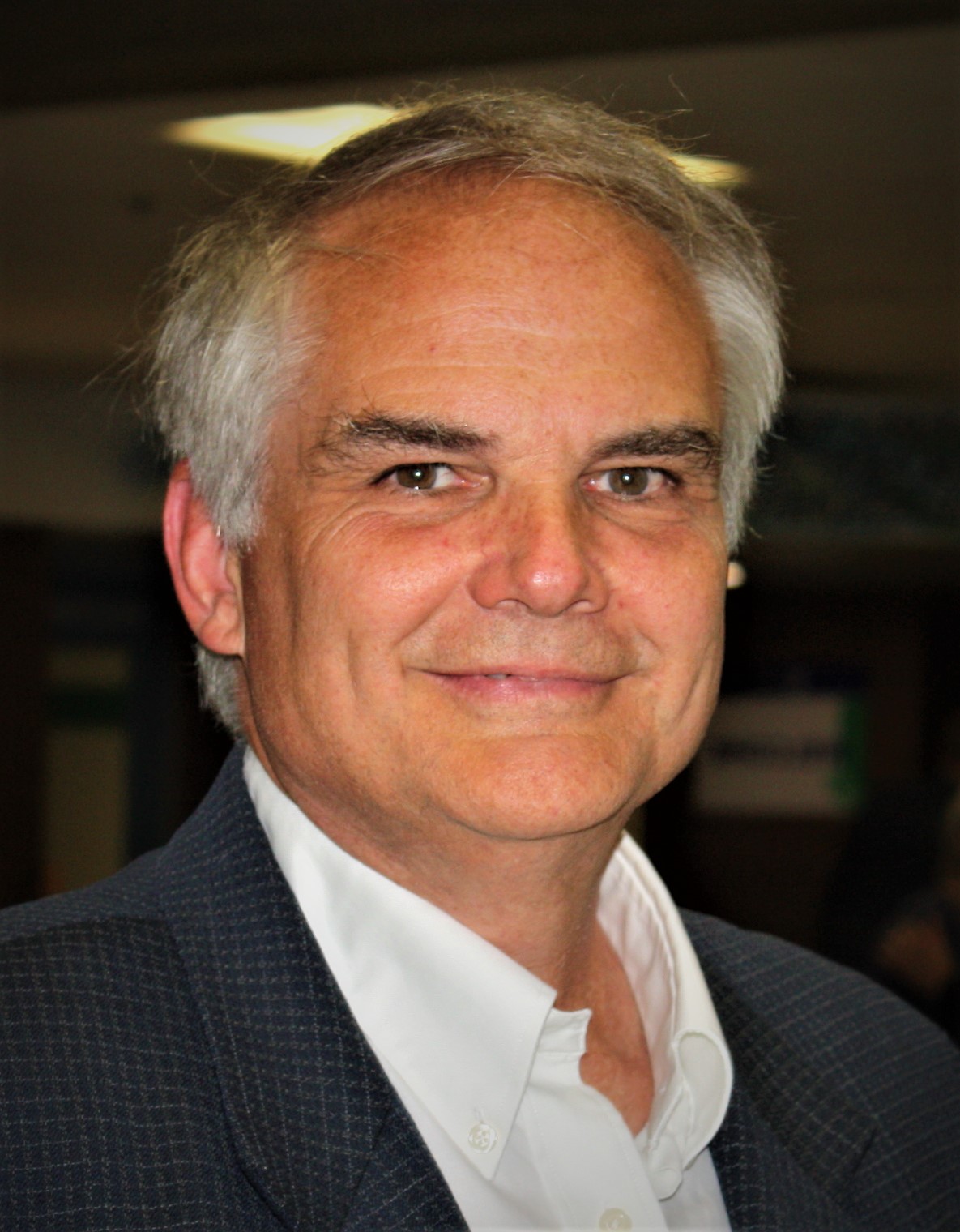
Chris George is an advocate, government relations advisor, and writer/copy editor. As president of a public relations firm established in 1994, Chris provides discreet counsel, tactical advice and management skills to CEOs/Presidents, Boards of Directors and senior executive teams in executing public and government relations campaigns and managing issues. Prior to this PR/GR career, Chris spent seven years on Parliament Hill on staffs of Cabinet Ministers and MPs. He has served in senior campaign positions for electoral and advocacy campaigns at every level of government. Today, Chris resides in Almonte, Ontario where he and his wife manage www.cgacommunications.com. Contact Chris at chrisg.george@gmail.com.