Perhaps it was too much to expect that this school year would start uneventfully. Instead, it looks like teacher union labour disruptions are again on the menu.
Teacher contracts ended in August this year and bargaining has supposedly been going on since June. The unions had asked that it start earlier but the government wanted to stick to the original schedule. However, given the current situation, it is unlikely that fact will have any bearing on the timing of the final outcome.
The current disagreement revolves around which issue gets negotiated at which bargaining table. Under the previous Liberal government, the bargaining process was changed so that major, system-wide and more costly issues, like salaries and benefits, would be negotiated at a province-wide table while local matters would be bargained locally. Local issues were considered to be things like sick day notes, staff transfers, how layoffs are handled, funding for professional development and new course class sizes.
Splitting the issues in this manner, makes sense. But before bargaining can begin however, the two parties need to agree on which topics go where. That seems to be the current sticking point with the unions accusing the government of trying to put formerly local issues on the province-wide table.
The unions have pushed back by taking the matter to the Labour Relations Board to rule on the central versus local issue matter. This means bargaining is now in limbo, possibly for months, while the board decides on what goes where.
In the meantime, the unions are ramping up their usual pressure tactics, through days of action including information pickets, wearing coloured T-shirts, scheduling strike votes and paying for media ads to try and swing parents to their side to put political pressure on the government.
Given all the major issues facing our education system, from falling test scores and declines in public school enrollment to violence in the classroom and the need for more supports for special needs students, one can forgive parents for saying “a pox on both your houses.”
Ontario Education Minister Paul Calandra initially tried to keep the temperature down with his statement that he respected the unions’ right to go to the board, but he couldn’t help noting that it would seriously delay the start of bargaining.
The government was, “at all times…ready to continue discussions on the scope of the central versus local issues before proceeding to the next stage of negotiations.” But he reminded everyone that “premature strike threats do not serve the interests of students and do nothing but create unnecessary panic for parents.”
Such disruptions do not help teachers improve student outcomes either. As if to remind everyone of the fact, the Organization for Economic Cooperation and Development (OECD) released its latest test results.
The so-called PISA results, which stands for the Program for International Student Assessment, are a global evaluation of 15-year-olds to assess their skills in reading, math and science. While on the one hand, it is worth noting that Canadian students did better than their international colleagues, it was alarming to see that our results have dropped – science dropped by five points, math by 12 and reading by 17.
Labour disruptions will do nothing to improve the situation, and in fact, may make it worse. Both parties need to find a way to set aside their differences in the interests of labour peace, sooner as opposed to later.
They have done it before. During the last round of bargaining, in 2023, both parties agreed to a voluntary binding arbitration process which actually resulted in a fair settlement without all the drama and uncertainty. Unfortunately, that does not seem to be the route chosen by the unions this time around.
They need to rethink.
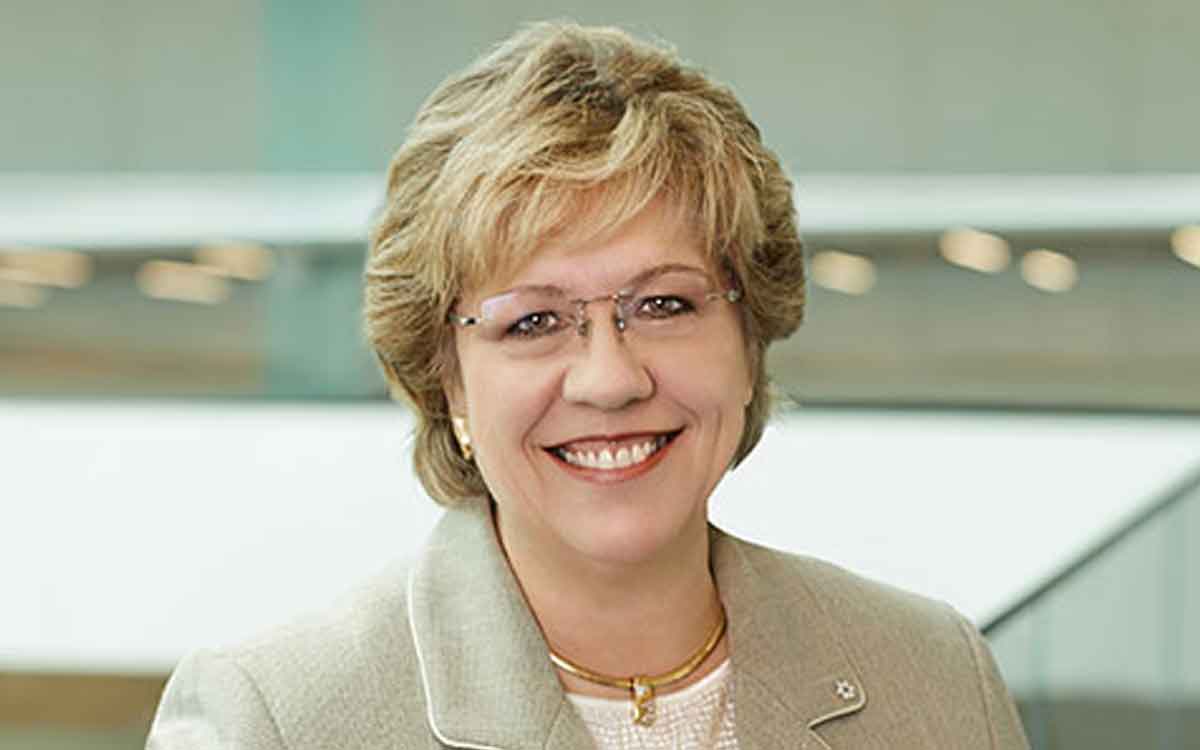
Janet Ecker is a former Ontario Finance Minister, Minister of Education, Minister of Community and Social Services and Government House Leader in the governments of Premier Mike Harris and Premier Ernie Eves. After her political career, she served as the founding CEO of the Toronto Financial Services Alliance, a public-private partnership dedicated to building Toronto region into an international financial centre. She currently sits on a number of corporate and non-profit boards, agencies and advisory committees.
Ms. Ecker received the Order of Canada for her public service contributions and was recognized as one of the “Most Influential People in the World’s Financial Centres” by Financial Centres International. She also received a “Canada’s Most Powerful Women: Top 100 Award” from the Women’s Executive Network and the Richard Ivey School of Business, among other awards. She is also one of the founders of Equal Voice, a national, multi-partisan organization working to elect more women.