Winners and losers from the U.S. midterm elections
Trump was the biggest wash-out of the night, but it had winners and losers, starting with those who woke up the next morning in power in places no one imagined.

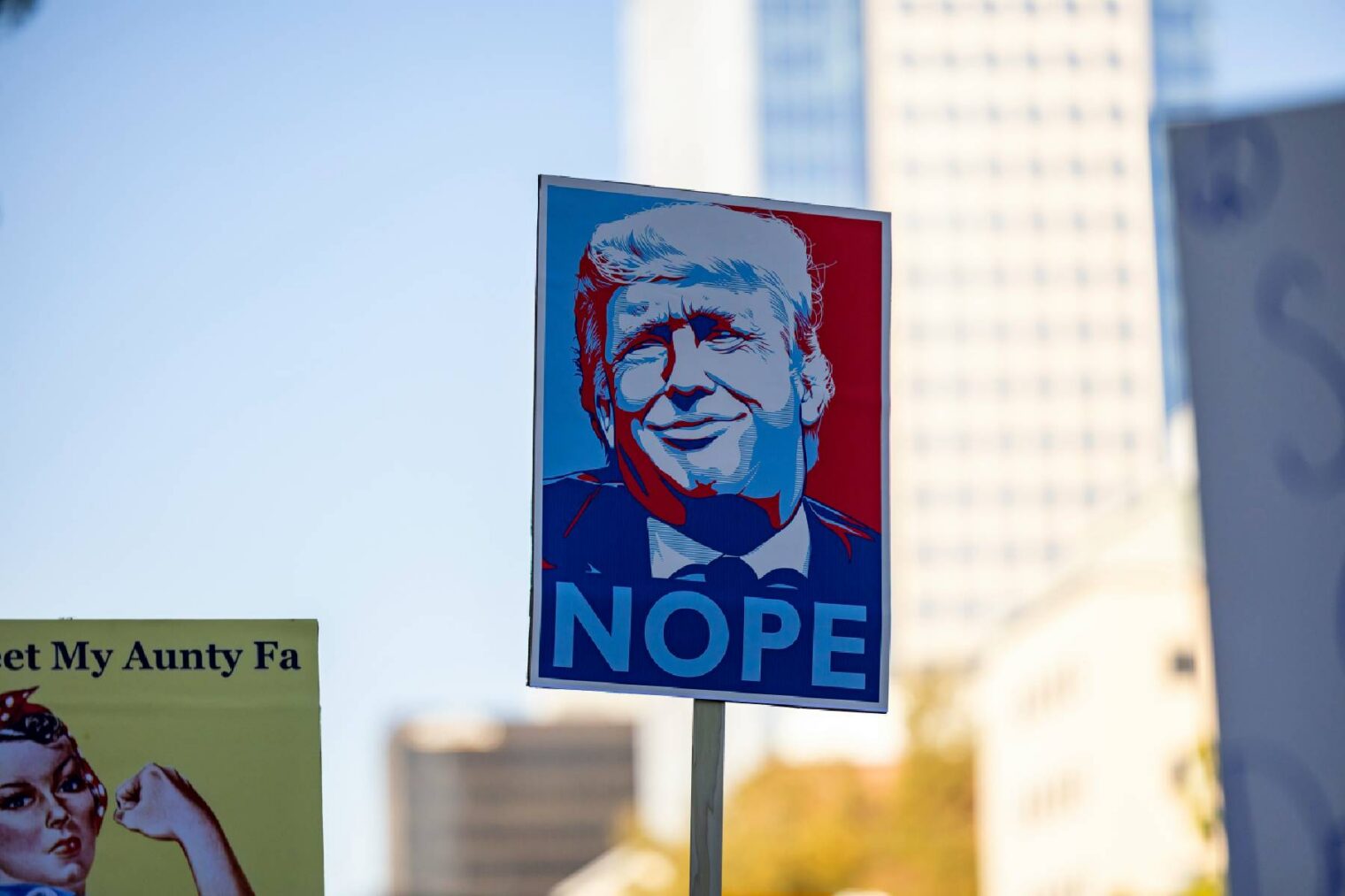
Before last week’s election apocalypse, some saw a blue wave coming; few saw the tsunami that sent the Republican Party of U.S. President Donald Trump reeling and pushed Democrats into power in states that hadn’t elected one as dogcatcher since the last century. Americans probably did not so much embrace Democrats as they simply had enough of a president who spent too much time extolling his creative powers and not nearly enough caring about everyday people and the costs they were bearing. Daily, Trump would remind voters of his renaming of buildings after himself, his “beautiful ballroom,” or his obsession with the backside of candidates he had endorsed or people he had appointed to office. Regardless of these distractions, Americans were not happy with an unresolved war in Iran and the price of fuel. They did not understand why inflation remained a pesky presence in their lives as the president announced new tariffs regularly, flummoxed when their president seemed to turn his head to his family’s increasing wealth on his watch, and exhausted by his arrogant endorsements of corrupt or unqualified candidates from the disgraced Ken Paxton in Texas to the debutante-appointed candidate Darline Graham Nordone in South Carolina. Trump and his MAGA contingent will now face two years of Democratic investigations, potential impeachments, and blocked legislation and appointments. Trump was the biggest wash-out of the night, but it had winners and losers, starting with those who woke up the next morning in power in places no one imagined.
WINNERS
Jon Ossoff – The re-elected senator from Georgia becomes a leading contender for the Democratic nomination if the anti-Semitic wing of the party doesn’t decide that it cannot abide a Jewish nominee. Ossoff won a Trump state by 20 points. He reminds people of JFK, speaks like Barack Obama, and could anchor the Democratic Party’s revival in the South.
Abdul El-Sayed – America’s first Muslim senator won a smashing victory in Michigan. He is an outspoken socialist, combative, theatrical, and charismatic. He received endorsements from all the leading Democratic politicians, and an Ossoff-El-Sayed ticket may be enough to keep the party’s traditional wing and the new socialists from splitting. Geographically and ideologically, it makes sense and could be a competitive pairing for 2028.
Pollsters – After several terrible cycles, the pollsters nailed it. They saw the wave coming, and the tsunami backed up their polling. They not only got the close races right, but the pollsters also picked up on what was boiling beneath the surface in formerly rock-ribbed red fiefdoms like Mississippi, South Carolina, and Texas. Trump’s acolytes can no longer shade polls as biased. They proved they adjusted after some rocky results in the last few rounds. Credibility was at stake, and this time, the outcomes reflected their findings round after round.
Those outside the Trump orbit – The end of the 2026 cycle means eyes turn to the 2028 presidential election year sweepstakes. Candidates like J.D. Vance and Marco Rubio, inside the Trump orbit, have experienced a setback. Voters have made it known they don’t like Trump’s methods or his policies. Those considering a presidential run who now serve in the administration carry the weight of this defeat. That includes Bobby Kennedy Jr., 2024 candidate Doug Burgum, and perhaps others like Secretary of War Pete Hegseth, should he survive impeachment threats.
Florida Governor DeSantis (the only large state to deflect the tsunami), former Virginia Governor Glenn Youngkin, Texas Senator Ted Cruz, and even Arkansas Governor Sarah Sanders would all be more suitable than Trump’s associates.
Chuck Schumer – With his career on life support, Chuck Schumer, Democratic Majority Leader in the Senate, selected a superior slate of candidates in swing states. Roy Cooper was an easy win in North Carolina; bringing back Sherrod Brown in Ohio worked very well; and Dr. Annie Andrews in South Carolina proved extraordinary. Not all his candidates were top-flight, but Schumer deserves credit for his 2026 candidate selection, and it should be enough for him to continue as majority leader and to repel AOC’s challenge to his Senate seat in New York.
"*" indicates required fields
LOSERS (besides Donald J. Trump)
Elon Musk – The world’s first trillionaire and scientific genius must be wondering why he wandered into a political landmine. Not long ago, Musk was admired as an inventor, a futurist, and a brilliant thinker. A few years in the Trump orbit have turned him into public enemy number one. Scrutiny applies to all his initiatives. Progressives want to nationalize his company. He spent hundreds of millions of dollars and lost virtually every race. He now faces a period of isolation that could lead him to back away from his commitments in the United States. Wrath knows no power greater than that of Democrats who think someone wants to cut funding to their pet projects and remove their lifeblood.
Conservative Jurists – Appointments will be next to impossible to confirm with the new left-wing Democratic Senate. If any Supreme Court justices retire (three of the conservative justices are over 70, including the chief justice), it will cause delays that block hearings or votes until after the next presidential election. The long-term threat remains packing the court, which has become the leading contender’s centrepiece of the 2028 presidential nomination. The 2024 nominee Kamala Harris has already been testing sound bites that would make this a prominent part of her platform.
Texas Republicans – In a twist no one predicted, the Texas Republican Party, which has dominated every state office in Texas for over 30 years, was removed entirely. From the Governor on down, all nine officials are now Democrats, including the three Railroad Commissioners. What this means for the state remains to be seen; a Democratic governor overseeing the next presidential election in Texas will give Democrats advantages they haven’t had in a generation, shifting “must-win” GOP state into the toss-up column.
- D. Vance – Once considered the assumed front-runner and likely nominee, Vance has been reduced to one of many in a crowded field. The administration’s unpopularity and the president’s low polls could prompt the party to look elsewhere. Florida Governor DeSantis was already making a strong pitch and held back little the day after the disastrous results poured in. A small field will probably increase. Look for Ted Cruz, Nikki Haley, and others to consider running in 2028.
Gerrymandering – The script for Trump has always been that since the Democrats do it, then Republicans should return the favour tenfold. If Joe Biden’s family grifted, then surely his family should benefit from government service and contracts. If the Democrats voted for a quasi-end to the filibuster, then Republicans should blow it up entirely. And with gerrymandering, since Democrats started it, Republicans should take it further. Voters do not always perceive things the same way, and in this case, Trump, his advisors, and those in specific areas, like Hispanic Texas, warned that it could backfire. It surely did, and Trump has been left wearing the egg, along with Republicans in several jurisdictions. Without mentioning the unfortunate downsides of this practice, it suffices to say that Republicans would be better off working for electoral reform regarding gerrymandering, not trying to outdo scoundrels.
There were plenty more on each side, but space limits documenting a full scorecard. Next up will be to assess who will run in 2028, who the favourites for the nomination are, who can win the general election, and who has the best lane to get there. Stay tuned!