PBO calls out Carney budget’s fiscal recklessness

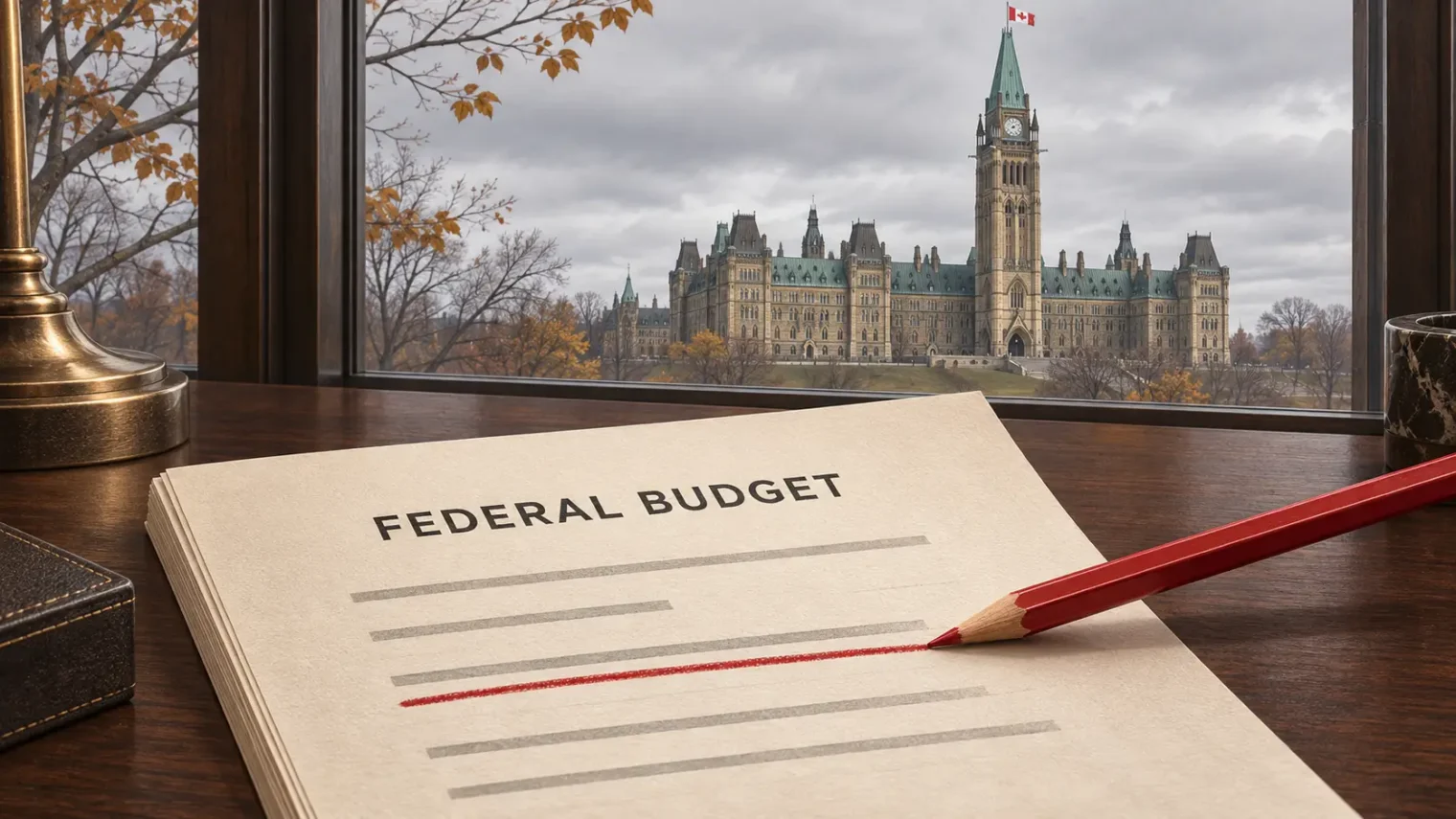
When households are drowning in debt and get a sudden windfall of cash, the responsible thing to do is use that money to pay overdue bills and maxed out credit cards.
Apparently, that logic doesn’t translate into action in Ottawa, at least not while Prime Minister Mark Carney and Finance Minister François-Philippe Champagne are in charge.
Parliamentary Budget Officer Anette Ryan released a series of reports analyzing the Carney government’s Nov. 5 budget and the picture isn’t pretty.
“The government promised to spend less to invest more,” said Ryan. “This budget spends more, invests more and borrows more.”
Ryan is projecting that the cost of new measures announced since Carney became prime minister in the early months of last year amounts to a whopping $331.6 billion.
You read that right: the cost of new measures announced since March 2025 comes to nearly a third of a trillion dollars.
And this year’s budget represented an opportunity, according to Ryan, to reduce the deficit and begin to get Canada’s fiscal house in order.
Government revenue was up significantly compared to previous projections and the federal government has experienced a windfall of additional revenue from increased oil prices.
"*" indicates required fields
But the Carney government spent away 96 per cent of the increased fiscal room generated through those windfalls, meaning the deficit will remain above $60 billion.
The PBO suggests that this year’s deficit could have been much closer to $40 billion had the federal government not spent away nearly all of the increased fiscal room generated by higher tax and royalty revenues.
Conservative finance critic Michael Chong was unimpressed.
The reality is “that the government is not on a fiscally sustainable track, that the debt is growing at ever-increasing rates, and that the interest on the national debt is now consuming much more than the federal government spends on public health care,” said Chong.
Hitting back, Champagne continued to insist that the government is borrowing more money to generate future economic growth. According to the finance minister, the federal government needs to borrow money to ensure that economic growth picks up.
But if government spending were the answer to generating economic growth, surely there would have been evidence of that during the Trudeau years. Former prime minister Justin Trudeau doubled Canada’s national debt during his decade in office and yet economic growth was the weakest in decades.
Compare that to the experience Canada went through in the 1990s and early 2000s, when the Liberal government of prime minister Jean Chrétien and finance minister Paul Martin actually cut government spending but managed to generate strong economic growth at the same time.
If one looks at history, the evidence is clear: more government spending does not translate to more economic growth. To grow the private sector, what is needed is responsible and predictable government spending, competitive tax rates, responsible levels of regulation, and a government that gets out of the way.
The Trudeau government never got this and it appears that the Carney government is falling into a similar trap.
One can only hope that the Carney government will start to learn from the Chrétien government’s experience.
In 1994, the Chrétien government presented a stand-pat budget, which failed to significantly restrain spending and ultimately disappointed economists who were looking for the government to rein in spending and get Canada’s fiscal house in order. After Canada’s finances continued to deteriorate, the Chrétien government used its next budget, in 1995, to finally slash spending.
Carney has been prime minister for less than two years. He still has another few years in his present mandate. There is still time to turn this around. Carney’s first two budgets have largely been disappointing, stand-pat budgets. Let’s hope that next year Carney finally reads the writing on the wall and gets serious about righting Canada’s fiscal ship.