The transparent bias of the legacy media thwarts Poilievre

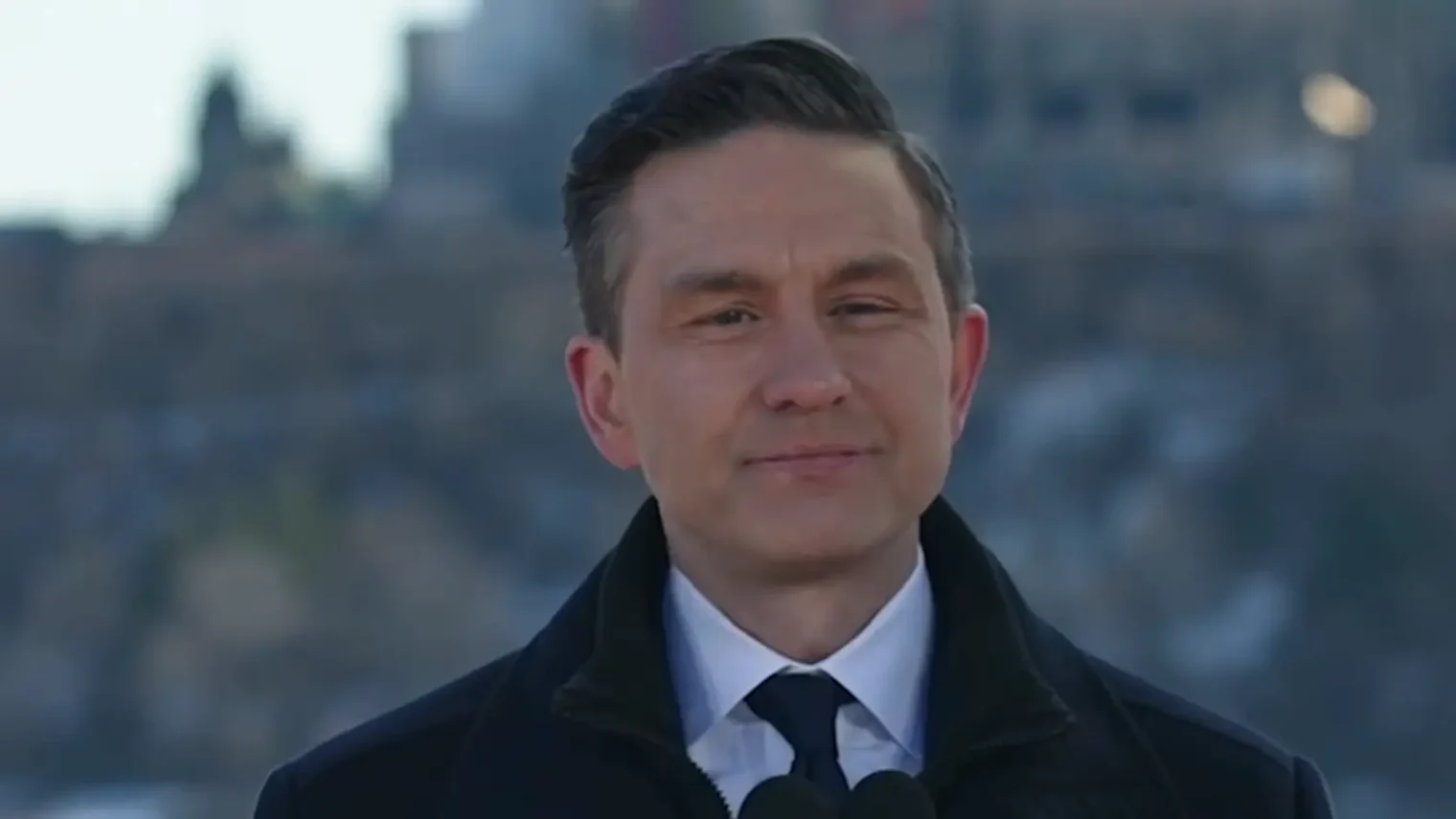
At last Saturday night’s Parliamentary Press Gallery Dinner, Conservative leader Pierre Poilievre not-so-subtly accused the Ottawa-based media of bias and dependence on government largesse. This follows months of him facing increasing scrutiny. With polls showing him far behind Liberal Prime Minister Mark Carney and the Liberal Party poised to gain in several by-elections on Dec. 7, a genuine sense of inevitability about Poilievre’s departure has taken hold. Unfortunately, our legacy media’s fingerprints are all over this rush to send Poilievre packing. Why are they interested in removing Pierre if he ensures Carney’s romp to victory in the next federal election? For the following reasons, they prefer the safety net of a second Liberal Party in case the original Liberal Party falters.
CONTROL THE NARRATIVE
If Poilievre rose from the ashes to make a political comeback for the ages, the Canadian Press would drown in its sweat. The thought of Poilievre, a henchman to many of the media types, would represent a break with traditional Canadian politicians. Having watched for over four years, they see an unprecedented opportunity to ensure Poilievre’s departure. With by-elections coming up, the media has placed a premium on the outcomes, believing that enough pressure will force the Conservative Party to abandon the Pierre experiment and return to a more mainstream leader. It may work, but some personalities behind these efforts fail the sniff test. The latest came from Lawrence Martin of the Globe and Mail, a decorated author, though not one most would call unaffiliated. Of course, Martin claims objectivity and has never announced support for any national candidate. At best, he represents a mushy middle that prefers a conventional politician, not a populist, as many media personnel call Poilievre. If Poilievre ever came close to power, it could threaten the establishment’s control of the story. They much prefer swooning over Carney, reporting Europe’s admiration for Canada, and explaining how important Canadian democracy is to the world community rather than explaining Poilievre’s dodging of global gatherings. Reversing that portrayal means that our journalists might have to apologize for Canada’s sudden interest in addressing problems at home before seeking approval from international bodies. Losing the thread on Canada’s good standing on the world stage is a prospect our high-profile news reporters would find troubling. Pushing Poilievre off-stage ensures that won’t happen. Being close to Europe, devoted to expensive government programmes, aligned with global efforts to reduce fossil fuels, and protective of a UN-based modern morality-industrial complex characterises the Canadian legacy media landscape.
MAINTAIN THEIR COZY POSITIONS
The CBC takes most of the heat for news or network subsidies, but many media outlets receive taxpayer funding. Large news outlets like Post Media Network, Bell Media, and The Globe and Mail receive healthy funding, while smaller entities such as Blacklock’s Reporter, The Hub, Juno, the Epoch Times, or The Niagara Independent do not. With that background knowledge, is it any wonder our dominant media journalists want to preserve the status quo? If someone like Poilievre talks about scaling back media funding, encouraging these sources to report more objectively, or even fight for the eyeballs that watch or read them, they become indignant. It’s as if they feel entitled to Canadians listening to them because they know what’s best for Canadians to read or watch. They are above passing on misinformation or disinformation. They see themselves as the honest brokers of factual news reporting. If they had to take ratings into account or consider the 35-40 per cent of conservative-thinking people in the nation, it might lead to a broader range of guests, greater latitude in research, and different voices on their programmes instead of the same old gang week after week. Vassy Kapelos, CTV’s Chief Political Correspondent, hosts Question Period and the daily political program called Power Play. In the years she has hosted, the only Trump official to appear on her programs is Ambassador Pete Hoekstra. Otherwise, she asks lapsed Republicans like David Frum, Never-Trumpers like Tom Nichols, or hoodwinks viewers into thinking that Democratic hacks like Hunter Biden bring some level of objectivity to a discussion. The same goes for Canadian politics. Why? Our journalists like the cozy nature of their jobs; they love their copy, and they don’t want to be challenged. Poilievre threatens that sublime condition.
SNOBBY CENTRAL CANADIAN ELITISM
Central Canada’s educated elite dominate our airwaves. Most of them, including Rosemary Barton, Andrew Chang, and Nahlah Ayed, attended Carleton University’s School of Journalism and Communication, which can promise to place students on Parliament Hill. Others, like Omar Sachedina, Adrienne Arsenault, and Wendy Mesley, matriculated at Toronto Metropolitan University (formerly Ryerson). Its Central Canada bias precludes an understanding of the West and often diminishes its importance. Sadly, many of them, wrapped in the Montreal-Ottawa-Toronto corridor, have failed to understand or even properly represent opinions outside the Laurentian belt in their programming. CBC’s At Issue includes Rosemary Barton, Chantal Hébert, Andrew Coyne, and Althia Raj. How do any of them bring Western opinion to the weekly discussion? Barton was raised in Winnipeg, but her love fests with former prime minister Justin Trudeau don’t enhance her credibility.
"*" indicates required fields
JUST-IN-CASE CLAUSE
On the Nov. 19 edition of the At Issue, Poilievre’s leadership took centre stage. The panellists commented on staffers leaving Poilievre’s team. Raj said many had left to join the new B.C. government, but the genuine test would be the Brantford by-election outcome. A loss there and a call for a leadership vote would begin immediately. She wasn’t sure if there were enough votes in caucus to dump Pierre, but the tipping point, if not Brantford, would be a loss in Saskatchewan. Hébert compared Poilievre’s circumstances to those John Turner faced after the 1988 election. “Things went from bad to worse for Mr. Turner,” recalled Hebert, implying that Poilievre faced the same fate. The overall assessment would be that if he stays, it would be to keep the seat warm for the eventual successor. In their books, Poilievre is as good as gone. Coyne betrayed the group’s true feelings, calling for the Canadian Conservative Party to distance itself from the right and crowd back to the centre. The call was subtle when broadcast, but the inference was clear. If the Conservatives want to be the government again, they will have to be more like the Liberals. If the Party refuses this good counsel, then they will remain in the political wilderness. It could be called the “Just-in-Case Clause.” Just in case the Conservatives win, better they have a moderate squish as leader. By the way, who do they envision?
THEIR FANTASY CANDIDATES
Someone ready to extend the long tradition of Canadian social democracy. Someone who will feed the media’s appetites by granting them access, playing by their rules, and understanding the importance of the Eastern media conglomerates. Our media masters would choose someone they could influence, like Ontario Premier Doug Ford. They know he would have problems in Quebec and the West, making it tough to put a coalition together, but he is Central Canadian timber, and our media could work with that if he formed a government. They also suggest Jason Kenney, former premier of Alberta, who would face big questions out West but would be conciliatory to the East and the corporate media heads. Anyone who will bump the populists, restore civility, and defuse ideas like public-private partnerships for health care or selling off government assets meets the criteria. Creating two Liberal Parties suits our media’s vision for the Canada they think we all want and deserve. It may be time for Poilievre to go. The media will be happy to help pack his bags and suggest his replacement. Conservative Party apparatchiks and those charged with determining the process should move slowly. The next leader will have to oppose Carney and the Liberal machine, including the national press, which has unfortunately turned in their journalistic credentials to become party activists; if not for the Liberal Party, then for a vision the Laurentian elite in this country crave.
